The simple walking tweak that could add years to your life
04/28/2026 / By Cassie B.
- Increasing walking pace by just 14 steps per minute significantly improves mobility and endurance in frail older adults after 12 weeks.
- The study focused on intensity over step count, with faster walkers showing a 65 percent improvement versus 39 percent for leisurely walkers.
- Participants walked as fast as safely possible to achieve gains in the six-minute walk test, a key predictor of independence.
- Better walking form including arm swing, heel-to-toe motion, and short steps helps seniors safely increase speed.
- The intervention is low-cost and accessible, requiring only a pedometer or smartphone to track pace.
A new study offers older adults a surprisingly simple prescription for maintaining strength and mobility: walk just a little bit faster. Researchers working with about 100 frail or prefrail adults living in retirement communities discovered that increasing walking pace by as little as 14 steps per minute — roughly a 10 to 15 percent boost in cadence — significantly improved physical endurance and function after 12 weeks. The findings challenge the conventional focus on step counts alone, suggesting that intensity matters at least as much as frequency.
The science of a faster stride
Participants in the study were categorized as frail or prefrail, meaning they already experienced some decline in energy, strength, or activity. All walked regularly, but researchers split them into two groups. One walked at their usual pace. The other was encouraged to walk “as fast as safely possible.” After 12 weeks, researchers assessed performance using the six-minute walk test, a widely accepted measure of endurance and functional capacity. The results were clear: the group that picked up the pace showed measurable improvement.
An increase of just 14 steps per minute was enough to improve physical performance. That means walking a bit faster can improve endurance, make stairs feel less challenging, and help seniors move through the day with more ease. This isn’t about turning a walk into an intense cardio session. It’s about moving with more purpose.
Why this matters for an aging population
The study is particularly relevant as America’s population ages. Frailty is a major predictor of falls, hospitalizations, and loss of independence. Simple interventions that can be done without gym memberships or expensive equipment are urgently needed. Walking is already the most accessible form of exercise for older adults, but this research suggests that how you walk matters as much as how often.
Dr. Lauren Elson, an instructor in physical medicine and rehabilitation at Harvard Medical School, emphasizes that walking can serve as a vigorous workout if approached correctly. “Walking can provide the vigorous, heart-pumping workout you need if you increase the intensity, duration, and frequency,” Elson said. “The first step, though, is learning to walk faster.”
Walking speed as a health marker
There is no ideal walking speed for everyone, but intensity matters. “You want to focus on intensity, so you walk at a pace that gets your heart rate up, your breathing becomes heavier, and you can only carry on a conversation using short sentences,” Elson said.
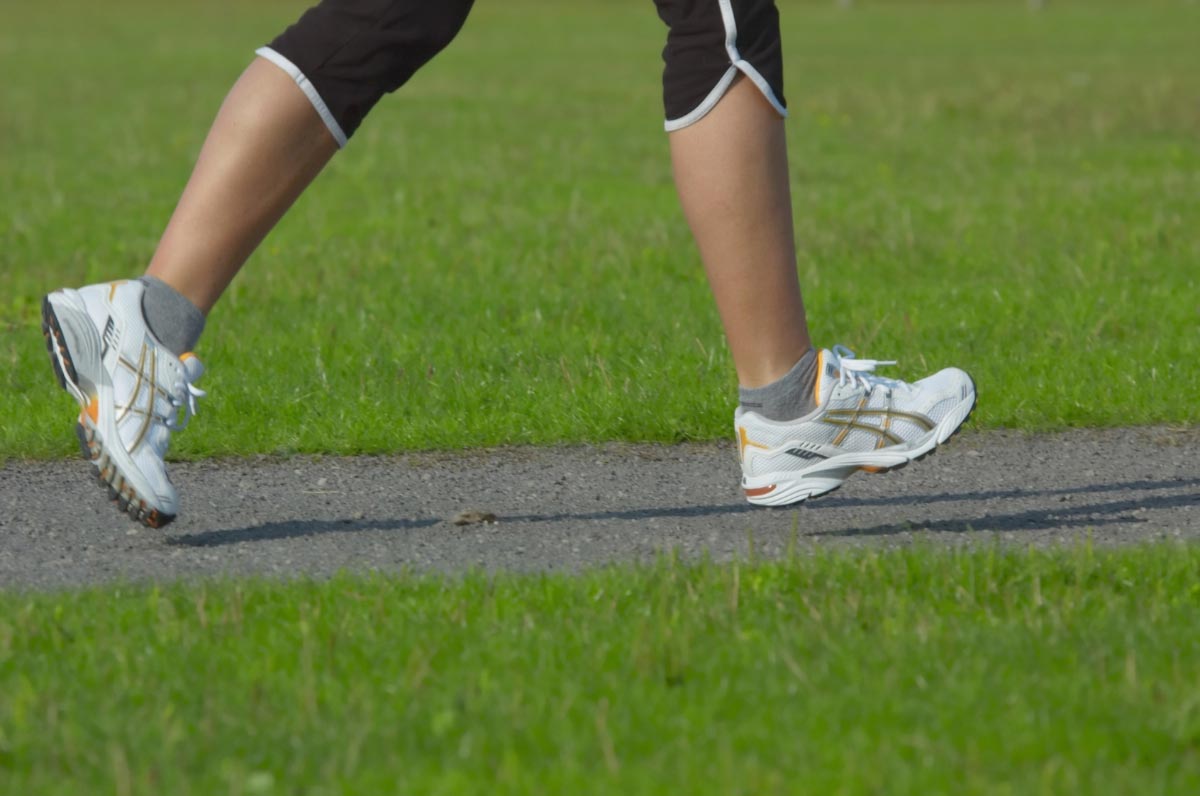
Walking faster sounds simple but requires practice. Good form helps. Stand tall, extend the spine, and keep the eyes focused about 10 to 20 feet ahead. Bend the elbows at 85 to 90 degrees and swing arms forward and back, not side to side. Land on the heel, roll through the foot, and push off with the toes. Take short, quick steps; long strides actually slow walkers down.
Broader evidence supports the approach
Another study published in August 2025 by the European Journal of Preventive Cardiology found that people with high blood pressure lowered their risk of heart attack, stroke, or heart failure by taking regular walks at higher speeds.
Dr. Wei Zheng, director of the Vanderbilt Epidemiology Center, has conducted large-scale research on walking and longevity. His study of nearly 85,000 participants found that those who fast walked for at least 15 minutes daily saw a nearly 20 percent reduction in premature death.
“We’ve actually known for quite a long time that walking speed correlates with outcomes, meaning the faster you walk, the better you do,” said Dr. Andrew Freeman, director of cardiovascular prevention and wellness at National Jewish Health in Denver.
Practical steps for starting today
For older adults who want to try this approach, experts suggest simple methods. Use a step-counting app or count steps over 30 seconds and double it. Aim for a gentle increase. Sync steps with a metronome app or a playlist with a faster beat. Walk at least 20 to 30 minutes several times a week and work up to a brisk pace that feels safe and sustainable.
Interval training also works. Walk at a normal pace for two or three minutes, then increase pace for 30 seconds, then slow down. Repeat five to 10 times. Another method is to use landmarks. Walk fast for one block, then slow down for one block.
A sustainable approach to aging well
The study highlights that even those starting at low fitness levels could safely increase their pace and maintain it during the 12-week intervention. This is encouraging for anyone who feels such movement is less accessible. There’s no need to overhaul an entire routine; just tweak it.
Movement is essential for healthy aging, but how you move matters as much as how often. This study shows that walking with slightly more speed can improve real-world physical function and help older adults stay strong, mobile, and resilient. Whether you are already walking daily or just getting started, there is power in the way you move. The next time the pavement calls, a little more purpose in each step might just be the simplest prescription for a longer, stronger life.
Sources for this article include:
Submit a correction >>
Tagged Under:
aging, fitness, health, Heart, longevity, prevention, research, scientific, walking
This article may contain statements that reflect the opinion of the author
RECENT NEWS & ARTICLES